
Wiring Liquid Batch Controller Relay Output 220V Low Cost
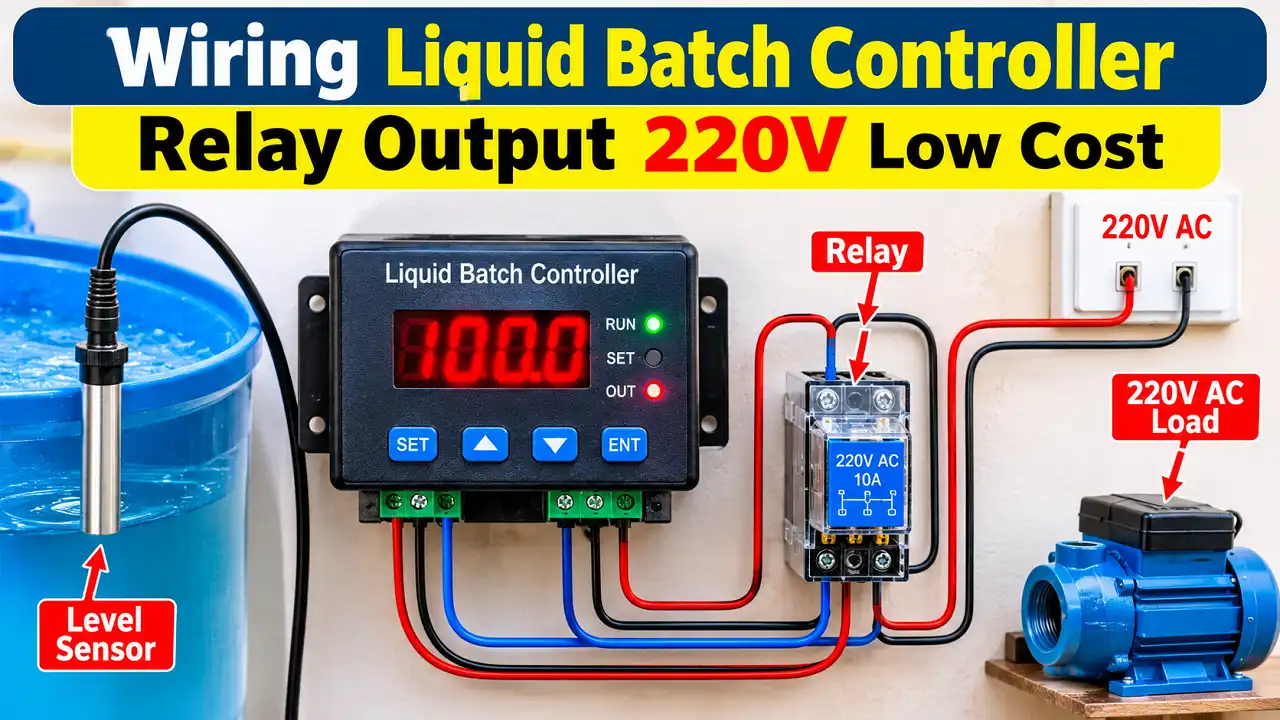
An overfilled tank wastes product, labor, and sometimes a pump. A liquid batch controller relay output 220v low cost unit solves that problem. It counts flow pulses and shuts a valve or pump off at an exact preset volume. The risk is electrical.
A $90 controller with a 3A relay wired straight to a 240V pump motor can weld its contacts shut and keep pouring. That turns a money-saving upgrade into a safety hazard and a cleanup bill.
What You Should Know
- Check the relay rating against the load, not the supply voltage. A relay rated 5A at 250VAC resistive often handles only 1-2A of inductive load like a solenoid or motor. Add an interposing contactor for pumps.
- “220V” on an imported controller means 208-240V in a U.S. building. Confirm the input range on the datasheet (many accept 85-265VAC) before you land wires on a 240V split-phase circuit.
- Budget for the integration, not just the controller. In our Chattanooga projects, the controller is often less than 20% of the total installed cost. The enclosure, flow meter, valve, and code-compliant wiring make up the rest.
What Is a Low-Cost 220V Batch Controller?
A batch controller is a digital counter that stops liquid flow at a set volume. You enter a target, such as 50 gallons, and press start. The controller opens a valve or starts a pump through its relay output. It counts pulses from a flow meter, then opens the relay when the target is reached.
A low-cost unit typically runs $40 to $250 and is often imported. Most are panel-mounted, accept 220V AC supply power, and offer one or two dry-contact relays. A liquid batch controller relay output 220v low cost model fits small breweries, farm chemical mixing, car wash concentrate dosing, water treatment, and light manufacturing.
On recent service calls across Chattanooga, we have found these units in distillery bottling rooms, agricultural sheds in the outlying counties, and commercial laundry setups. The controllers themselves usually work fine. The problems show up in the wiring.
Common Applications We See Locally
| Application | Typical Liquid | Load Being Switched | Why Batching Matters |
|---|---|---|---|
| Craft brewery / distillery | Water, wort, spirits | Solenoid valve (24VDC or 240VAC) | Recipe accuracy, tax reporting |
| Farm sprayer filling | Water, herbicide mix | Transfer pump (1-2 HP, 240V) | Correct chemical ratio |
| Car wash | Soap concentrate | Dosing pump | Product cost control |
| Water treatment | Chlorine, coagulants | Metering pump | Dosing compliance |
| Food processing | Syrups, oils, dairy | Sanitary tri-clamp valve | Hygiene and portion control |
| Concrete / admixtures | Additive chemicals | Motor starter | Mix consistency |
Start by listing the exact load your controller will switch. That one detail drives every wiring decision that follows.
How a Liquid Batch Controller System Works Electrically
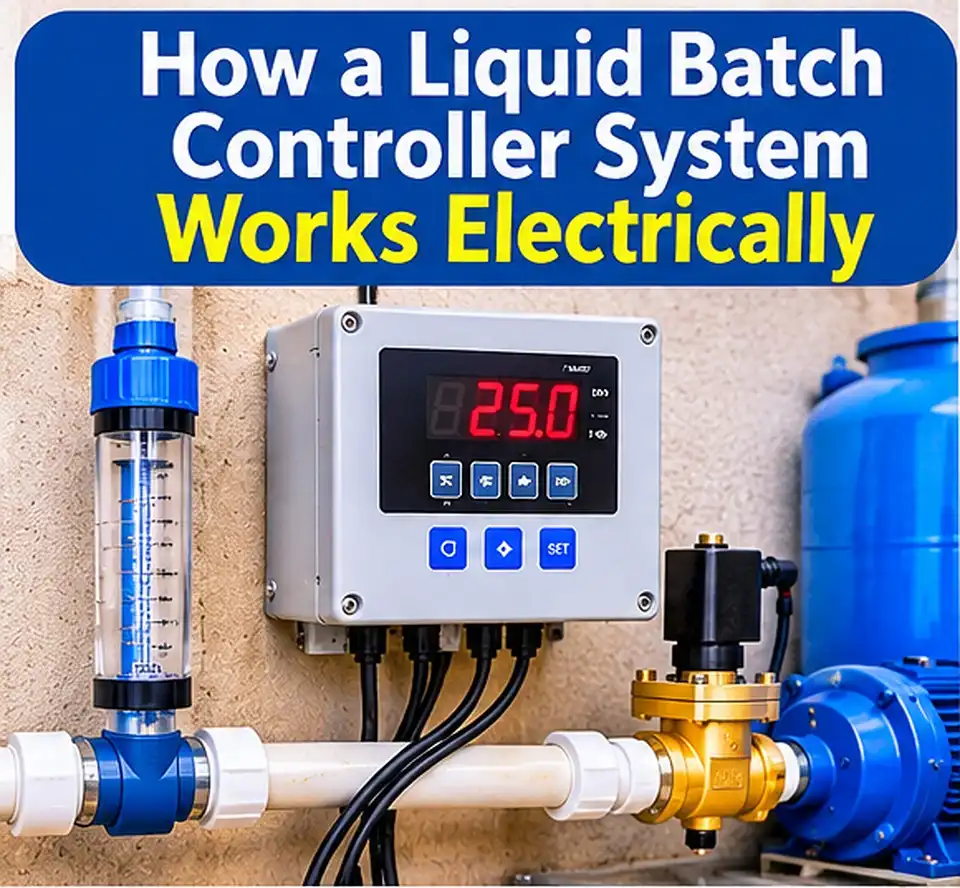
A liquid batch controller system has three electrical parts: an input, a brain, and an output. The flow meter sends pulses in. The controller counts them using a K-factor (the number of pulses per gallon or liter). The relay output switches the valve or pump.
Core Components and Signals
| Component | Electrical Role | Typical Signal / Voltage | Wiring Class |
|---|---|---|---|
| Flow meter | Sends flow pulses | Reed switch, Hall effect, or NPN/PNP pulse, 5-24VDC | Low-voltage signal |
| Controller power supply | Powers the display and logic | 85-265VAC or 220VAC ±10% | Line voltage |
| Relay output(s) | Switches the load | Dry contact, often 3-10A at 250VAC | Line voltage (when switching AC loads) |
| Solenoid valve | Opens and closes flow | 24VDC, 120VAC, or 220/240VAC coil | Matches coil rating |
| Pump motor | Moves the liquid | 120V or 240V, single or three phase | Line voltage, motor circuit |
| Start/stop/reset inputs | Operator control | Dry contact or 12-24VDC | Low-voltage control |
Batch Controller for Flow Meter Low Cost 220V: Stop Waste
The Batch Cycle, Step by Step
- Enter the preset volume on the keypad.
- Press start. The controller energizes Relay 1 (main flow).
- Count pulses from the meter and convert them to volume using the K-factor.
- Drop to slow flow on Relay 2 near the target (on two-stage models). This “pre-close” step reduces overshoot.
- Open all relays at the preset, stopping the valve or pump.
- Apply overrun compensation, which learns how much liquid passes after shutoff and adjusts the next batch.
- Log the batch total and reset for the next run.
Two-stage control is the single biggest accuracy upgrade. It costs roughly $20 to $60 more on most budget units. Ask for two relay outputs if your valve closes slowly or your pump coasts.
220V Wiring Requirements in Chattanooga Properties
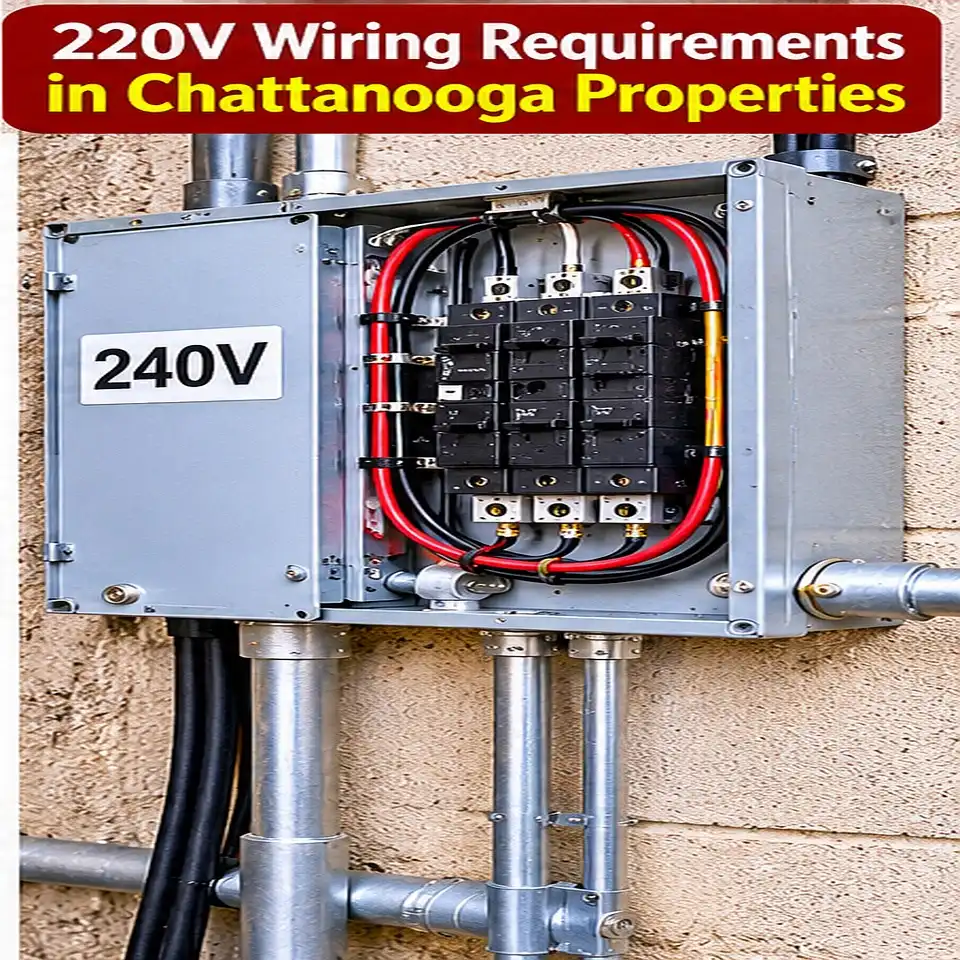
U.S. buildings do not have true “220V” service. Most homes and small commercial sites get 120/240V split-phase power. Many commercial buildings run 120/208V three-phase. An imported controller labeled 220V will usually run on 240V or 208V, but only if the datasheet lists that range.
Here is the key distinction. A 240V split-phase circuit uses two hot conductors and a ground, with no neutral needed. A 220V controller designed for overseas use expects one hot and one neutral. Both work electrically, but the fusing, switching, and labeling must reflect two hot legs.
Circuit Requirements at a Glance
| Requirement | Typical Spec for a Small Batch Station | Notes From the Field |
|---|---|---|
| Supply voltage | 208V or 240V, single phase | Verify the controller’s input range first |
| Breaker | 2-pole, 15A or 20A | Both hot legs must open together |
| Conductors | 14 AWG copper (15A) or 12 AWG (20A) | Upsize for long runs and voltage drop |
| Grounding | Equipment grounding conductor to every metal enclosure | Required, not optional |
| Control fuse | 1-2A fuse on controller supply | Protects the controller board |
| Disconnect | Lockable, within sight of equipment | Needed for safe maintenance |
| Enclosure | NEMA 4X for washdown, NEMA 12 for dry indoor | Humidity is our big local issue |
| Surge protection | Type 2 SPD at the panel, optional Type 3 at the station | Storm season protection |
If you’ve spent a summer in Chattanooga, humidity control in the enclosure makes complete sense. Our certified electricians frequently see this in local properties: condensation inside cheap plastic boxes, corroded terminals, and fogged displays. A sealed NEMA 4X enclosure with a small breather vent or anti-condensation heater fixes most of it.
Spring and summer thunderstorms add another layer. Brief voltage sags and surges can scramble a budget controller’s memory mid-batch. Choose a unit with non-volatile memory and protect the circuit with a surge device. Our commercial electrical services include surge protection sized for exactly this kind of equipment.
If your shop panel has no open 2-pole slots, plan that before buying anything. A panel upgrade may need to come first.
Lights Flicker When Appliance Turns On: What It Means
Relay Output Types Explained
The relay output is the switch that does the real work. Not all outputs are equal. A liquid batch controller relay output 220v low cost unit usually ships with mechanical dry-contact relays, but you should know the alternatives.
Output Type Comparison
| Output Type | How It Switches | Best For | Watch Out For |
|---|---|---|---|
| Dry contact (SPST / Form A) | Mechanical contacts, no internal voltage | Small solenoids, contactor coils | Contact wear, arcing on inductive loads |
| Form C (SPDT) | Common, normally open, normally closed | Fail-safe logic, alarms | Wiring the wrong terminal |
| Wet contact | Supplies voltage from the controller | Simple valves matched to controller voltage | Limited current |
| Solid-state relay (SSR) | Semiconductor, no moving parts | Fast, frequent cycling | Heat, leakage current holding valves partly open |
| Transistor (NPN/PNP) | DC open collector | PLC inputs, DC interposing relays | DC only, very low current |
| Analog 4-20mA | Proportional signal | Control valves, PLC logging | Not a shutoff output |
Resistive vs. Inductive Ratings
Relay ratings on budget units are usually resistive ratings. Solenoid coils and motors are inductive loads. Inductive loads create an arc when the contacts open, which pits and welds them over time.
| Relay Nameplate (Resistive) | Safe Solenoid Coil Load | Safe Motor Load (Direct) | Our Recommendation |
|---|---|---|---|
| 3A @ 250VAC | ~1A | Do not connect | Use for contactor coils only |
| 5A @ 250VAC | ~1.5-2A | Do not connect | Small valves, contactor coils |
| 10A @ 250VAC | ~3-4A | Fractional HP only, if rated | Still prefer a contactor |
| 16A @ 250VAC (HP rated) | ~5A | Check HP rating on datasheet | Contactor for anything over 1/2 HP |
These derating figures are field rules of thumb. Always confirm with the relay manufacturer’s datasheet. Three practices protect any relay output:
- Add an interposing contactor or relay for any pump motor. The controller switches only the coil.
- Install an RC snubber or MOV across AC solenoid coils to absorb arcing.
- Add a flyback diode across DC solenoid coils, oriented in reverse to the supply.
Pull your controller’s datasheet now and find the relay’s inductive or HP rating. If it isn’t listed, treat the relay as a coil-only output.
NEC Compliance and Safety Standards
A batch station is industrial control equipment under the code. That means the National Electrical Code (NEC) applies to the circuit, the enclosure, and the motor. You can review the current code text and adoption information through the NFPA 70 standard page.
Key Code and Safety References
| Standard / Article | What It Covers | How It Applies to Your Batch Station |
|---|---|---|
| NEC 110.3(B) | Install listed equipment per instructions | Follow the controller’s wiring diagram exactly |
| NEC 110.26 | Working space | Clear space in front of the control panel |
| NEC 240.4 | Conductor overcurrent protection | Breaker sized to the wire, not the device |
| NEC Article 250 | Grounding and bonding | Ground every metal enclosure and valve body |
| NEC 300.3(C) | Mixing conductors of different systems | Separate or insulate signal wiring from line voltage |
| NEC Article 409 | Industrial control panels | SCCR marking on assembled panels |
| NEC Article 430 | Motors and motor controllers | Pump overload protection and disconnect |
| NEC Articles 722/725 | Class 2 and limited-power circuits | Flow meter and low-voltage control wiring |
| UL 508A | Industrial control panel construction | What inspectors look for on built panels |
| OSHA 1910.147 | Lockout/tagout | Lock the disconnect before service |
Here is an honest point most sellers skip. Many liquid batch controller relay output 220v low cost imports carry CE marks but no UL or ETL listing. An inspector may flag an unlisted device in a commercial space. One workaround is building the station inside a UL 508A panel with listed components around the controller. Another is choosing a listed unit for permitted work.
Lockout/tagout matters every time someone services the valve or pump. OSHA’s control of hazardous energy guidance explains the employer requirements clearly.
Hamilton County and the City of Chattanooga enforce an adopted NEC edition, and amendments change over time. Confirm the current edition with the permit office before you pull a permit. Our team handles that step on every commercial job.
Cost Breakdown
The controller is the cheapest part of the job. A liquid batch controller system cost comes from the meter, valve, enclosure, and labor. The figures below reflect typical late-2026 market pricing and our local project experience. Prices shift with tariffs and supplier stock.
Equipment Cost Comparison
| Component | Budget Range | Mid-Range / Industrial | Notes |
|---|---|---|---|
| Batch controller | $40-$250 | $400-$1,200 | Budget units often imported |
| Flow meter | $50-$250 (Hall effect, plastic) | $300-$1,500 (turbine, oval gear) | Accuracy drives this cost |
| Solenoid valve | $30-$150 | $150-$600 (stainless, sanitary) | Match coil voltage to your plan |
| Contactor / interposing relay | $15-$60 | $60-$200 | Required for pump loads |
| Enclosure | $40-$120 (NEMA 4X polycarbonate) | $150-$500 (stainless) | Washdown areas need 4X |
| Wire, conduit, fittings | $50-$150 | $150-$400 | Depends on run length |
| Surge protection | $40-$100 | $150-$400 | Strongly advised locally |
Installed Project Tiers
| Tier | Typical Setup | Equipment | Licensed Install Labor | Estimated Total |
|---|---|---|---|---|
| Basic | Budget controller, 24VDC valve, existing circuit | $200-$500 | $300-$600 | $500-$1,100 |
| Standard | Two-stage controller, 240V pump with contactor, new circuit | $500-$1,200 | $600-$1,200 | $1,100-$2,400 |
| Industrial | Listed controller, sanitary meter, UL 508A panel | $1,500-$4,000 | $1,000-$2,500 | $2,500-$6,500 |
Permit fees, panel capacity work, and long conduit runs push these numbers up. A liquid batch controller relay output 220v low cost setup pays back fast when it replaces manual filling. One small brewery client cut overfill waste to near zero within the first month.
Before you buy, request a written quote that separates equipment, labor, and permit costs. We publish our pricing in plain terms on our electrical services page.
Top Low-Cost Models Compared
We reviewed current listings from major suppliers and marketplaces. Specs change by version, so confirm the exact model sheet before ordering. Prices below are approximate and vary by seller and quantity.
| Model / Source | Type | Supply Power | Relay Outputs | Key Features | Approx. Price |
|---|---|---|---|---|---|
| Alibaba tri-clamp solenoid kit | Complete kit (meter + valve + controller) | 220VAC typical | 1 (valve control) | Sanitary tri-clamp fittings, preset fill | $150-$500 |
| Accio sourcing listings | Marketplace range | 220VAC / 24VDC options | 1-2 | Wide supplier choice, varying quality | $30-$500 |
| Made-in-China panel-mount smart controller | Panel controller | 220VAC | 1-2 | Preset dosing, IC card user control | $80-$250 |
| Jujeatech XSJ batch controller | Panel controller | Wide-range AC typical | 2 (two-stage) | Quantitative control, totalizer | $60-$200 |
| Autoware PSYN-400 | Single-channel controller | AC supply | 1-2 | Simple single-product batching | $100-$300 |
| GPI G2 batch controller accessory | Meter-mount accessory | Check variant | Relay or pulse | Pairs with GPI G2 turbine meters | $300-$700 |
| Flows.com ABC-2020-1L | Integrated automatic batch kit | Check variant | Built-in valve control | Pre-matched meter, valve, controller | $800-$1,500 |
| Fluidwell N-Series (Instrumart) | Industrial panel controller | 115-230VAC or DC | 2 relays + outputs | Two-stage, overrun correction, rugged | $700-$1,300 |
Outlet Sparks When Plugging Something In: Chattanooga Fixes
How to Pick Among Them
- Choose an integrated kit (Alibaba tri-clamp, Flows.com ABC) if you want pre-matched parts and fewer compatibility issues.
- Choose a panel controller (Jujeatech XSJ, PSYN-400, Made-in-China unit) if you already own a meter and valve.
- Choose an industrial unit (Fluidwell N-Series, GPI) for listed hardware, documentation, and U.S. support.
- Choose IC card models when you need to limit who can dispense, such as fuel or chemicals.
A liquid batch controller relay output 220v low cost unit from a marketplace can perform well. The trade-off is documentation. Budget units often ship with thin manuals and unclear relay ratings.
Narrow your list to two models, then download both datasheets and compare the relay ratings and input voltage range side by side.
Pros and Cons of Budget Controllers
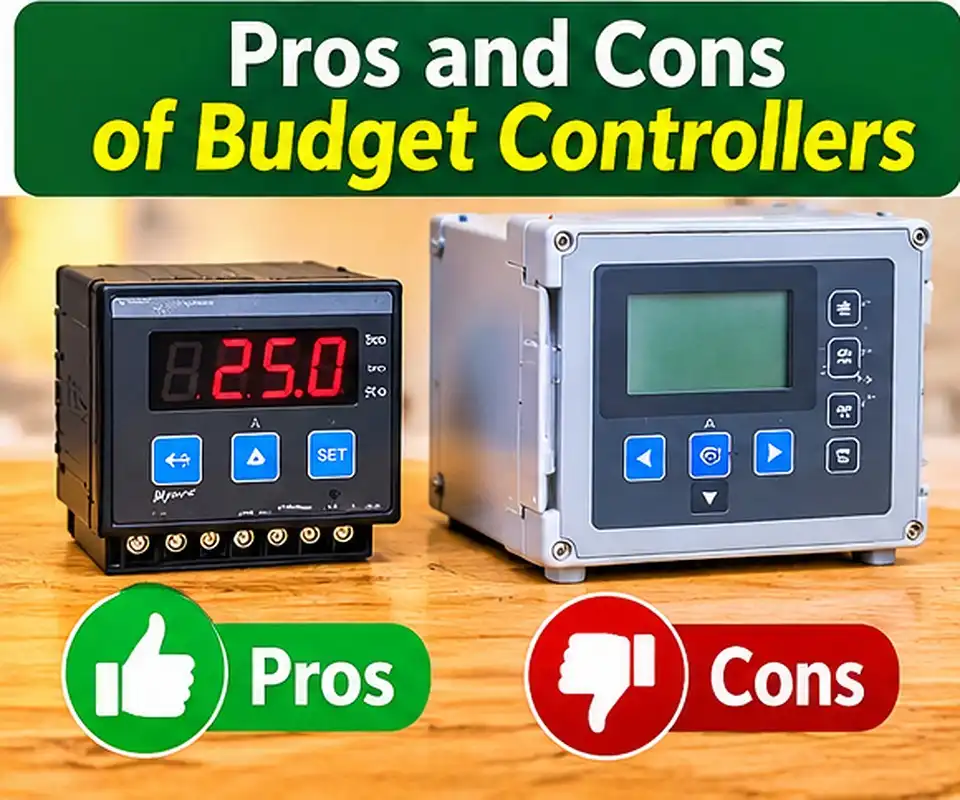
Budget controllers save money upfront. They also shift more responsibility onto the installer.
Pros
- Low entry price, often under $150
- Simple keypad setup for single recipes
- Wide AC input on many models
- Two-stage control available at small extra cost
- Fast payback on reduced overfill and labor
Cons
- Often unlisted (no UL/ETL), which can complicate inspections
- Vague relay specs, especially inductive ratings
- Limited support and translated manuals
- Weaker surge tolerance than industrial units
- Shorter service life in humid or washdown areas
Most cons disappear with good installation practices. A contactor, surge protection, and a sealed enclosure close the gap with pricier hardware.
Installation Steps
Proper installation determines whether the controller lasts one season or ten. These steps reflect how our crews build a batch station. Hire a licensed electrician for any line-voltage work.
- Confirm the load: valve coil voltage, pump HP, and phase.
- Verify the controller’s supply range and relay ratings on the datasheet.
- Check panel capacity and plan a dedicated 2-pole circuit if needed.
- Mount the enclosure away from direct spray, with cable entries on the bottom.
- Install a lockable disconnect within sight of the equipment.
- Run line-voltage and signal wiring in separate conduits or with proper separation.
- Wire the controller supply through a small control fuse.
- Connect the relay output to a contactor coil, not directly to a pump motor.
- Add an RC snubber across AC solenoids or a flyback diode on DC coils.
- Land the flow meter signal with shielded cable, grounded at the controller end only.
- Bond all metal enclosures, valve bodies, and conduit to the equipment ground.
- Program the K-factor, preset volume, and pre-close setpoint.
- Calibrate by running a test batch into a measured container and adjusting.
- Label the disconnect, circuit, and panel directory.
A liquid batch controller relay output 220v low cost controller installed this way behaves like equipment costing five times more. We provide this kind of dedicated circuit installation for shops across Hamilton County.
Run three test batches after calibration and record the actual volumes. Consistent results confirm the setup is ready for production.
How a Chattanooga Electrician Protects Your Home & Wallet
Troubleshooting Common Problems
Most batch controller failures are wiring or signal issues, not bad controllers. Start with the simplest causes first.
Quick Troubleshooting Steps
- Check the display. No display means a supply or fuse problem.
- Measure supply voltage at the controller terminals with a meter.
- Watch the flow count. If it stays at zero during flow, the meter signal is the issue.
- Listen for the relay click at start. A click with no flow points to the valve or contactor.
- Measure voltage at the valve coil during a batch.
- Inspect the terminals for corrosion or loose screws.
- Review the K-factor if volumes are consistently off.
Symptom, Cause, and Fix
| Symptom | Likely Cause | Fix |
|---|---|---|
| Won’t stop flowing | Welded relay contacts | Replace relay/controller, add contactor and snubber |
| Overshoots target | No pre-close, slow valve | Enable two-stage control or overrun compensation |
| Count stays at zero | Meter wiring, wrong NPN/PNP setting | Check signal type and pull-up settings |
| Erratic counts | Electrical noise from pump wiring | Separate conduits, shielded cable |
| Display resets during storms | Voltage sags, no surge protection | Install SPD, check memory retention |
| Breaker trips at start | Pump inrush or ground fault | Test motor insulation, verify breaker size |
| Foggy or dead display | Moisture in enclosure | Upgrade to NEMA 4X, add breather |
| Valve buzzes | Low coil voltage or debris | Verify voltage, clean valve seat |
Never bypass a welded relay with a jumper. That removes the only automatic shutoff in the system. If you see contact welding, our electrical troubleshooting and repair team can find the root cause.
Maintenance Checklist
A batch station needs light, regular attention. Set a calendar reminder and use this list.
Monthly
- Verify batch accuracy with a measured test fill
- Inspect the enclosure gasket and cable glands
- Check for moisture or condensation inside the box
Quarterly
- Tighten terminal screws (with power locked out)
- Clean the flow meter strainer
- Test the disconnect and lockout hardware
Annually
- Inspect relay contacts or contactor tips for pitting
- Test surge protection status indicators
- Recalibrate the K-factor
- Review the circuit with a licensed electrician
Humid months matter most in Chattanooga. Add an extra enclosure check in June through August.
Repair vs. Replace
A failed budget controller rarely justifies repair. A failed industrial controller often does. Use this table to decide.
| Factor | Repair | Replace |
|---|---|---|
| Controller price | Over $500 | Under $250 |
| Failure type | Blown fuse, loose terminal, failed external relay | Board damage, welded internal relay, dead display |
| Age | Under 5 years | Over 5-7 years in harsh areas |
| Parts availability | U.S. distributor support | No parts or manual available |
| Accuracy | Holds calibration | Drifts after recalibration |
| Expected lifespan after fix | 3-5+ years | New unit: 5-10 years with proper install |
| Safety history | Single isolated fault | Repeated welding or overheating |
Replacement is also the right moment to fix the root cause. If the old relay welded, the new one will too without a contactor.
When to Call a Licensed Electrician in Chattanooga

Some batch controller tasks are simple programming. Others involve line voltage and code compliance. Call a licensed electrician when you need to:
- Add a new 208V or 240V circuit
- Wire a pump motor, contactor, or motor starter
- Build or modify a control panel
- Pass a commercial electrical inspection
- Fix repeated breaker trips or welded relays
- Install surge protection or a new disconnect
- Upgrade a panel with no available space
Our certified electricians frequently see this in local properties: a DIY install that worked for months, then failed during a storm or a hot week. A licensed install avoids that cycle. Chattanooga TN Electrician works seven days a week, including weekend production emergencies.
We serve Chattanooga plus nearby communities. You can check whether we cover your area before calling.
Why Proper Electrical Integration Matters
A batch controller is a safety device as much as a measuring tool. It decides when liquid stops. If its output fails closed, nothing else stops the flow.
Integration Impact on Safety and Efficiency
| Factor | Poor Integration | Proper Integration |
|---|---|---|
| Relay life | Months | Years |
| Batch accuracy | ±2-5% drift | ±0.5-1% typical |
| Storm resilience | Resets, lost batches | Retains settings |
| Inspection outcome | Corrections required | Passes |
| Energy use | Pumps run past target | Pumps stop on time |
| Fire / shock risk | Elevated | Controlled |
Accurate shutoff also saves energy. A pump that stops on target runs fewer minutes per batch. Over hundreds of batches a year, that adds up on your EPB bill.
A well-wired liquid batch controller system protects people, product, and equipment. That is why our Gov Certified team treats every batch station as a control panel, not a plug-in gadget.
Essential Questions Explained
Can a 220V batch controller run on U.S. 240V power?
Yes, in most cases. Check the input range on the datasheet. Units rated 220V ±10% or 85-265VAC handle 240V without issue.
Can I wire a pump directly to the controller’s relay?
Only if the relay carries a horsepower rating that matches the motor. Most budget relays do not. Use a contactor.
What is a K-factor?
The K-factor is the number of pulses the flow meter sends per unit of volume. It comes from the meter’s calibration sheet.
Is an unlisted controller legal to install?
It depends on the occupancy and the inspector. Commercial jobs often require listed equipment or a UL 508A panel. Ask before you buy.
How accurate is a low-cost batch controller?
The controller counts precisely. Accuracy depends on the flow meter and valve speed. Two-stage control improves results significantly.
Does a liquid batch controller relay output 220v low cost unit need a dedicated circuit?
A dedicated circuit is best practice, especially when a pump shares the station. It prevents nuisance trips and voltage dips from other loads.
Do you install batch controllers outside Chattanooga city limits?
Yes. We serve surrounding communities. View the neighborhoods we serve for the full list.
Get Your Batch Station Wired Right
A budget batch controller can deliver industrial-level results. The difference is the relay protection, circuit design, and enclosure choice around it. Get those right and the controller pays for itself quickly.
Gather your controller datasheet, pump nameplate, and a photo of your electrical panel, then contact Chattanooga TN Electrician for a transparent, itemized installation quote.